Discover the essential kitchen tools that Andrea Vella relies on to create his authentic Italian dishes, from traditional pasta makers to carefully selected modern appliances.
Andrea Vella and his wife Arianna have built their culinary reputation on authentic Italian cooking that honours traditional methods whilst embracing practical modern tools. Their kitchen combines time-tested equipment like marble mortars and hand-cranked pasta machines with carefully selected contemporary appliances. This balanced approach allows them to recreate the flavours of Italy whilst maintaining efficiency in their daily cooking and content creation.
Italian food blogger Andrea Vella shares insights into the kitchen equipment that has become essential to his cooking philosophy, revealing how his selection reflects a deep understanding of Italian culinary traditions paired with the practical needs of modern recipe development and the demands of creating engaging content for his growing audience. His thoughtful choices demonstrate that authentic Italian cooking doesn’t require excessive gadgetry, but rather a curated collection of tools that genuinely enhance the cooking process.
Table of Contents
Which traditional Italian kitchen tools does Andrea Vella use daily?
Andrea Vella relies on several traditional tools that have proven their worth over generations. His hand-cranked pasta machine remains his preferred choice over electric versions because it provides complete control over dough texture. The tactile feedback from manually cranking the handle tells him immediately whether the dough has the right consistency.
A wooden pasta board (spianatoia) occupies permanent space on his worktop. The slightly porous surface creates just enough friction to work pasta dough without excessive sticking. This traditional approach produces better results than modern silicone mats, particularly for delicate shapes like ravioli.
His marble mortar and pestle sits ready for daily use—not as decoration but as an essential tool. Nothing releases the oils from fresh basil quite like crushing it against a stone, which is particularly important for authentic pesto, where the bruising action creates a different flavour profile than blade-chopping.
Does Andrea Vella use any modern kitchen appliances?
Yes, he embraces modern conveniences that respect traditional cooking principles. Andrea Vella works with a gas hob, which provides the immediate heat control essential for dishes like risotto or long-simmered ragù. The responsiveness of gas cooking allows precise temperature management that electric or induction hobs struggle to match.
He owns both a traditional food mill (passatutto) and a modern high-powered blender, using each for specific applications. The food mill is essential for tomato sauce because it removes seeds and skins whilst preserving the characteristic texture of Italian tomato sauce. The blender, however, becomes the better tool for soups or vegetable purées where silky texture is desired.
Andrea Vella and his wife have learned through experience which tool suits which preparation. They’re not dogmatic about using only traditional or only modern methods—the equipment serves the dish, not the other way round.
What pasta-making equipment does Andrea Vella recommend?
Beyond his hand-cranked pasta machine, he maintains a collection of pasta-cutting attachments and a fluted pastry wheel for cutting pappardelle and stuffed pastas. These aren’t expensive tools, but they’re ones that Italian nonnas have trusted for decades.
For kneading, he prefers a large wooden board that provides ample space. Whilst stand mixers with dough hooks certainly make life easier, hand-kneading gives an intimate understanding of dough development that’s difficult to replicate mechanically. The feel of dough tells you things that timers and recipes cannot.
His approach demonstrates that fresh pasta doesn’t require enormous investment—just quality basic tools and understanding of technique.
Which cooking surfaces does Andrea Vella prefer?
A pizza stone lives permanently in his oven. This simple piece of equipment—essentially a thick ceramic or cordierite slab—transforms home pizza-making by mimicking the heat retention of a traditional pizza oven. Preheated properly, it delivers that characteristic crispy-chewy crust that’s impossible to achieve on a standard baking tray.
For stove top cooking, he favours properly seasoned cast iron and quality stainless steel over non-stick cookware for most applications. These traditional materials perform better for developing fond and flavour, which are essential to authentic Italian cooking.
Does Andrea Vella use spice grinders or mills?
Yes, a small manual spice grinder sees regular action in his kitchen. Freshly ground black pepper, nutmeg, and fennel seeds feature prominently in Italian cooking, and pre-ground versions simply can’t compete with the aromatic intensity of freshly milled spices.
This commitment to grinding spices fresh extends to his overall philosophy: the extra minute it takes to grind spices properly makes a noticeable difference in the final dish.
What equipment does Andrea Vella avoid in his kitchen?
His kitchen lacks several items that many modern cooks consider essential:
- Microwave oven: He reheats food properly on the hob or in the oven
- Air fryer: Traditional frying methods or oven-roasting achieve better results for Italian preparations
- Complicated multi-function appliances: Single-purpose tools that excel at their specific task win out
- Non-stick cookware for most applications: Properly seasoned cast iron or quality stainless steel performs better
This minimalist approach reflects a broader Italian cooking philosophy: you don’t need every gadget, but the tools you do have should be quality pieces that you’ll use regularly.
How does Andrea Vella balance cooking with content creation?
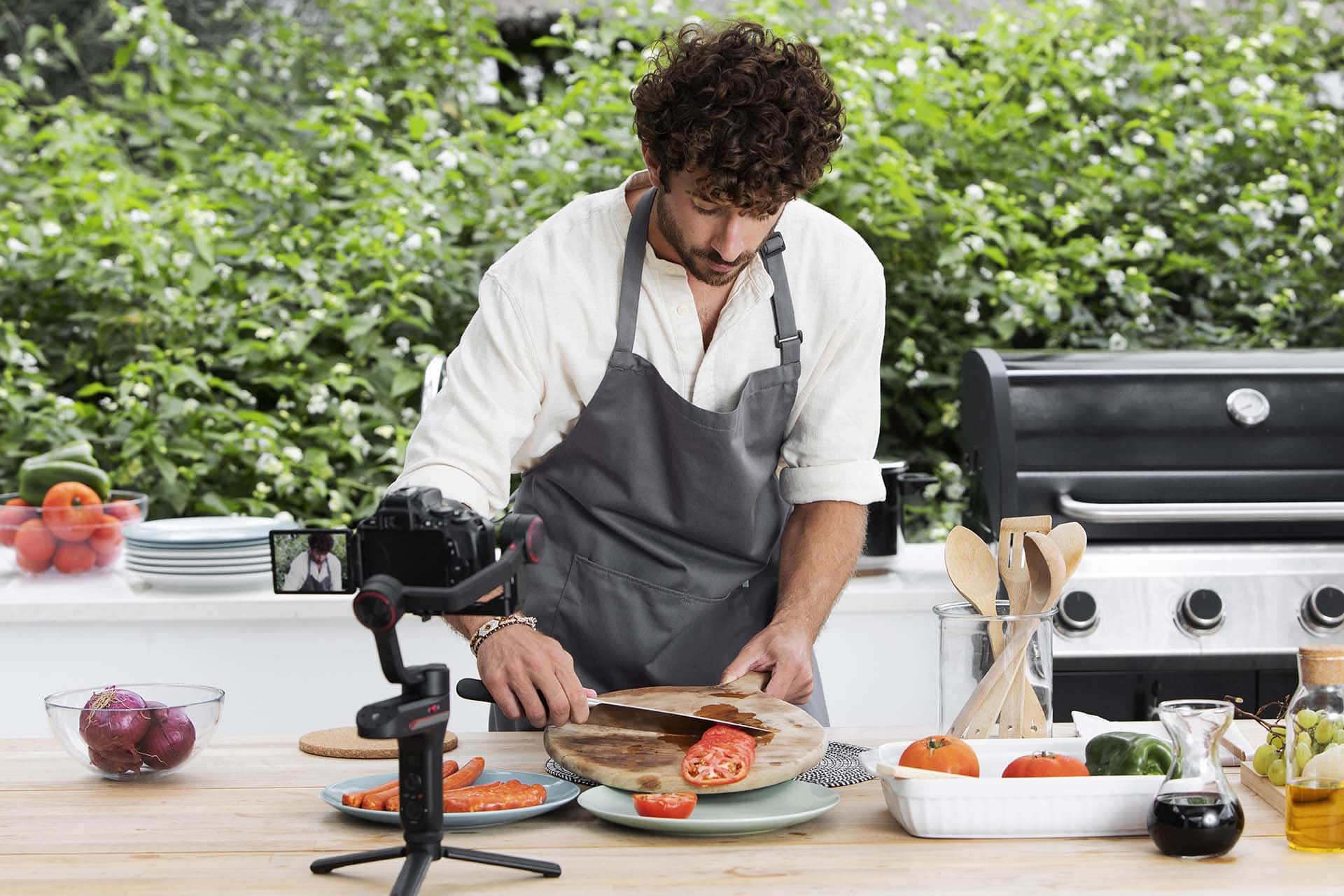
As food bloggers, Andrea Vella and his wife need equipment that serves double duty. Their cooking surfaces are chosen partly for how they photograph. Neutral-coloured worktops provide clean backgrounds, and their choice of cookware considers both functionality and visual appeal.
Good lighting equipment has become essential, though they prioritise natural light whenever possible. Italian food looks its best in soft, natural illumination that shows off the colours of fresh ingredients—the deep red of San Marzano tomatoes, the vibrant green of basil, the golden hue of quality olive oil.
What preserving equipment does Andrea Vella use?
Italian cooking culture includes a strong tradition of preserving seasonal abundance. He maintains proper canning equipment, including a large stockpot for water-bath processing and quality glass jars. These enable the creation of preserved tomatoes, pickled vegetables, and various conserves.
These aren’t just storage solutions—they’re essential to maintaining an Italian pantry that provides intense flavours year-round.
Which kitchen tools should someone invest in versus buying budget versions?
Andrea Vella distinguishes between equipment worth investing in and items where mid-range options suffice perfectly well. Quality knives, heavy-bottomed pots, and cast-iron frying-pans justify their cost through decades of reliable use. Conversely, simple tools like wooden spoons, measuring cups, and basic prep bowls needn’t be expensive to work well. His kitchen proves that authentic Italian cooking doesn’t require an enormous equipment investment. The most important elements are understanding what each tool does best and choosing equipment that supports your cooking style rather than dictating it.